Our Visit to Jablonec Part I
Donny and I arrived at Jablonec nad Nisou, a small city of about 50,000 in the northeastern Czech Republic, in the late afternoon. We had appointments over the next few days to visit glass button factories, the bead and button museum, and to poke about for caches of old buttons and cabochons, but that first afternoon we just wanted to get our bearings in the older part of town.
We immediately noticed the stunning Art Nouveau buildings that line the main commercial avenues. We soon learned that these were built in the late 19th and early 20th centuries to house the huge trading firms that supplied most of the world’s glass buttons and costume jewelry prior to World War I. Since 1985 we’ve been buying the very same buttons that were shipped from these buildings more than 100 years ago; it was uncanny to see where they started their very long path! (As a lover of Art Nouveau design, I also enjoyed seeing the clear influence Czech artist Alphonse Mucha had on the architects’ visions.)

Northern Bohemia, as this part of today’s Czech Republic was called, has been a center for glass and crystal production since the 13th century, due in part to large deposits of silica and limestone in the nearby Jizera Mountains. The first glass buttons were made in the Jablonec region in the 1760s, and were primarily glass stones set in brass buttons. During the 1820s, innovations in production led to the pressing of the whole button from a heated glass rod using molds set in metal tongs. Small presser plants, almost exactly like the one we visited the next day, sprung up in the valleys of the Jizera Mountains throughout the 19th century. Besides buttons, these pressers also created glass stones for jewelry, chandelier drops, and beads by the millions.
Today there are only two men left in the Czech Republic who operate button pressing houses, which makes the future of this craft a bit uncertain. We visited one of them in a hillside village just outside Jablonec. His small shop, situated behind his home, is almost identical to the ones operating 150 years ago.
 (Historic picture is from the book The Jablonec Button, published in 2007 by the Museum of Glass and Jewelry in Jablonec nad Nisou.)
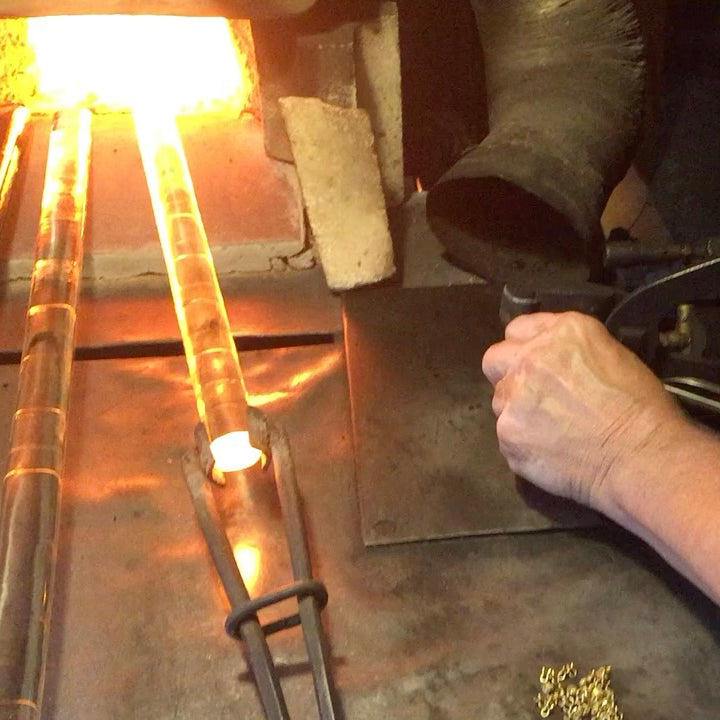
Each button is made individually as the presser heats glass rods in an oil furnace and presses them in a mold set in long iron tongs.

We were amazed at the easy speed the presser achieved in turning out the buttons.
 Two buttons just as they came out of the presser’s tongs. A box of our buttons ready to go to the painting and finishing workshop.
 Extra button tongs hanging below pictorial reminders of Jablonec’s communist years. An up-close glimpse of button molds set in the the tongs.
 We visited on a chilly day, but could imagine how uncomfortably warm the shop would be in the summertime.
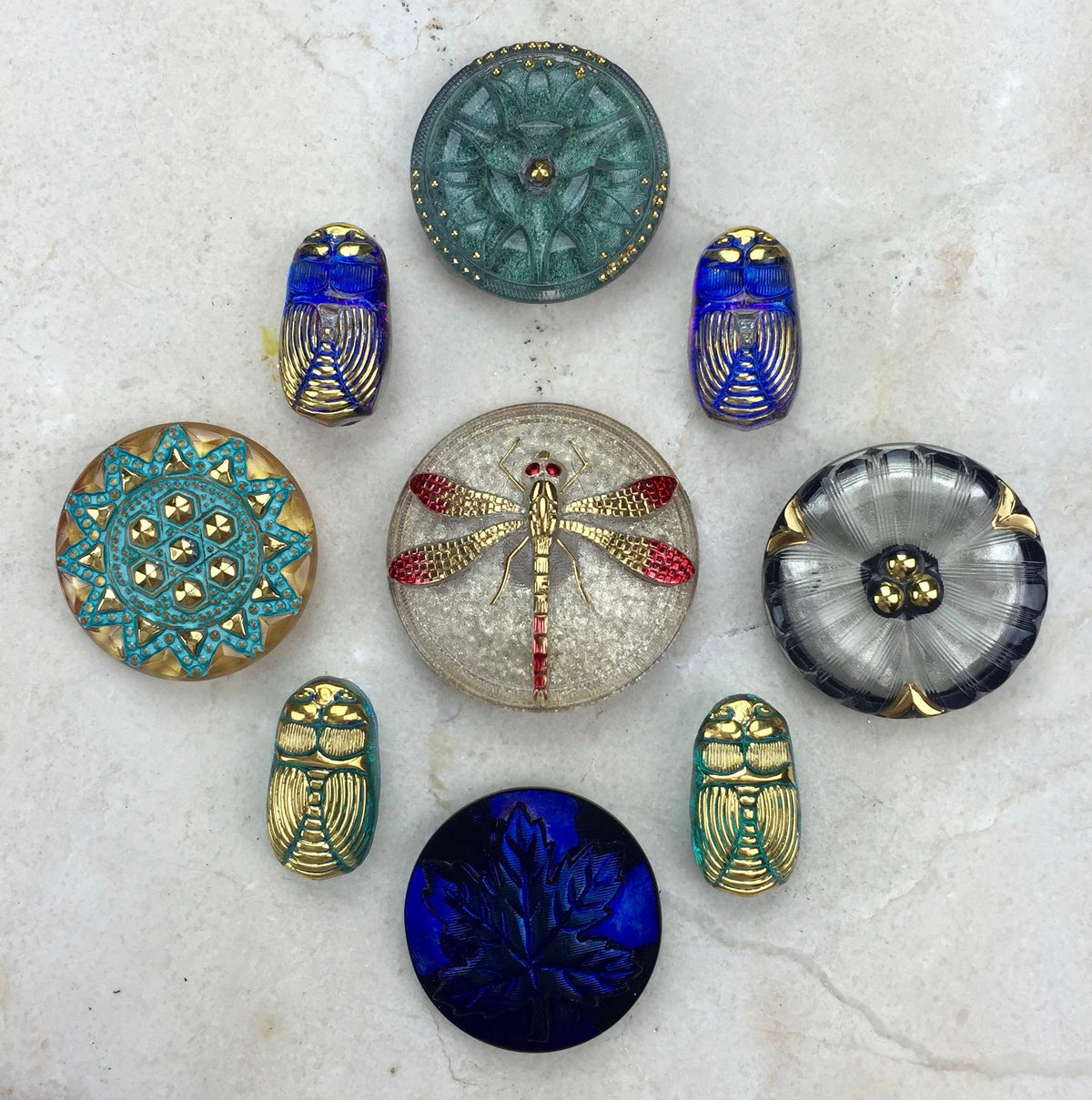
 (L) Some buttons are pressed in clear glass which then have a colorful background painted on their reverse side. Others are pressed from colored glass rods such as these. (R) Button sample cards in the presser’s desk drawer.
Even though we had been buying these new Czech glass buttons for almost a year, we found that we had not really understood how handcrafted they truly were, and how precarious their future might be.
The next day we followed our newly pressed buttons to the small factory (very small—only three workers) where they were trimmed, polished, painted and fired.

Leave a comment
This site is protected by hCaptcha and the hCaptcha Privacy Policy and Terms of Service apply.