The Story Of Japanese Cherry Brand Glass
Every button and piece of vintage glass cabochon in our collection comes to us with a story. Most often, it’s a fanciful tale of Victorian fashion trends, but occasionally it’s a heroic narrative intimately tethered to momentous events in human history.
The story of Japanese Cherry Brand glass cabochons is one of the epic ones. These rare glass beads and stones have a fascinating biography that includes cataclysmic historic events highly disproportionate in scale to their diminutive size.

In 1945, the world celebrated the end of WWII and started to rebuild. General Douglas MacArthur was sent to Japan to govern and rebuild their economy. Japan desperately needed foreign currency, so MacArthur encouraged Japanese manufacturers to produce consumer items for export to the United States.
So between 1945 and 1952, Japanese factories manufactured ceramic figurines in styles mimicking popular American collectibles like those made by the well-known Hummel and Royal Doulton brands. MacArthur instructed manufacturers to label these items Made in Occupied Japan to identify which products were meant for export.
This simple identification launched an unanticipated collectors trend. Today flea market enthusiasts ardently collect items with the Made in Occupied Japan label. MacArthur would likely be both surprised and amused that he inadvertently initiated such an unusual collectors’ obsession.

Also, during the American occupation of Japan, small artisan glassmakers in Osaka were asked by American jewelry makers to produce glass beads for export. Osakan glassmakers had developed their trade for centuries, and the occupying Americans decided to leverage their considerable talents.
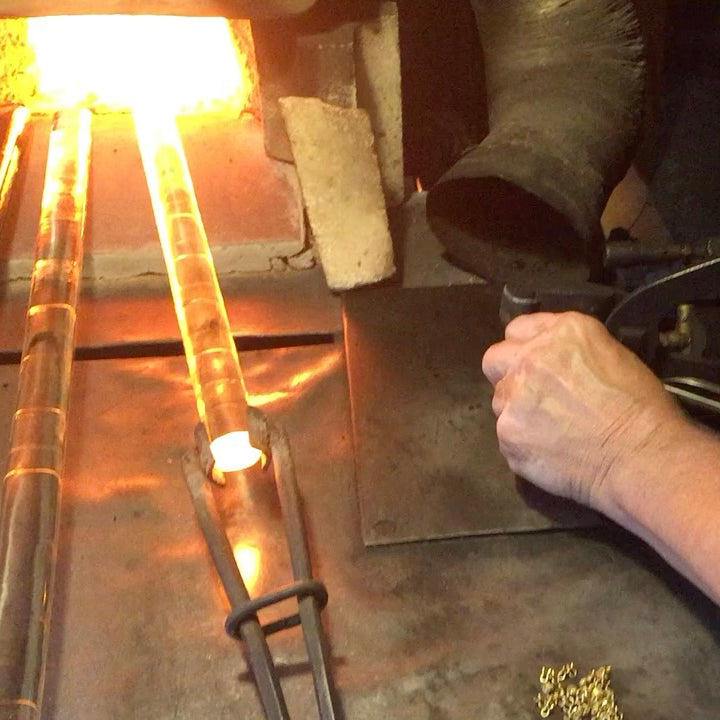
Most of the glassmakers were rice farmers by day and bead producers by night. In other words, glassmaking was a hobby that brought in a bit of extra income. However, during the occupation, glass cabochon commissions from American jewelry makers came in large numbers creating new lucrative economic opportunities. So these full-time rice farmers set up flamework workshops in their homes and spent the wee hours of the night producing glass beads and stones for export.
It’s important to note that the Osakan glassmakers were independent artisans, unaffiliated with any particular company. However, they did informally band together and sell their products under the name Cherry Brand and created a unique orange sakura blossom label to identify their work.

American agents provided the Japanese glassmakers with samples of the beautiful goldstone glass and molded flower cabochons produced in Czechoslovakia in the 1920s and 1930s. The Japanese artisans quickly learned to make glass beads in similar styles in equal quality.
We love to ponder the fantastic contribution Cherry Brand cabochons made to reconstructing the Japanese economy after WWII. During the occupation, the Osaka bead-making farmers produced cabochons in large quantities generating considerable amounts of needed foreign currency. This story also helped us understand why Japanese-made vintage glass cabochons are so similar to their Czech counterparts.
We always keep an eye out for dusty cardboard boxes sealed with the distinctive orange sakura blossom label affiliated with Cherry Brand cabochons on our button hunting trips. Happy dances inevitably ensue when we discover one.

The most common Cherry Brand cabochons in our collection are sparkling, jewel-tone opals flecked with bits of coppery goldstone mixed with lapis, emerald, ruby, and amethyst glass. We also have some boxes of pressed flower stones imitating carved jade and coral.
Finding Cherry Brand glass is becoming more difficult with every passing year. Although produced in large quantities, it was only made during the seven years that the Americans occupied Japan. When the Americans left, the costume jewelry agents followed them, and manufacturers started sourcing their glass in Western Germany.
We’re thrilled to include Cherry Brand glass in our jewelry lines while we still can. We think their story is a tale well worth telling and that their value will grow as they become increasingly rare. We hope your Cherry Brand cabochons become treasured family heirlooms and that you pass this sweet story on to the many generations in your family.

Leave a comment
This site is protected by hCaptcha and the hCaptcha Privacy Policy and Terms of Service apply.